We do AI-based predictive maintenance for machine-driven industries.
machine monitoring
data collection
AI analysis & modeling
assesment & forecast
Our sensor & data AI processing solution allows organizations to base service and replacement decisions on real-time equipment condition rather than rigid schedules or intuition.
This data-driven approach delivers measurable gains across core operational metrics:
Reduced downtime: Early detection enables proactive planning and intervention.
Lower maintenance costs: Unnecessary preventive tasks are eliminated, and emergency repairs are reduced.
Extended asset lifespan: Minor faults are addressed before they escalate into costly failures.
Improved safety: The likelihood of hazardous breakdowns in critical systems is significantly reduced.
Higher productivity: Assets operate more reliably, with fewer disruptions to operations.
As a result, predictive maintenance has become essential across industries such as manufacturing, logistics, oil and gas, food and beverage, mining, and utilities. It stands out as one of the most practical and proven entry points for digital transformation.
HOW WE DO PREDICTIVE MAINTENANCE?
At the heart of our predictive maintenance solution is our proprietary sensor technology. We develop custom sensors tailored to each type of machinery – capturing vibrations, acoustic signatures, temperature fluctuations, electrical currents, magnetic fields and many other.
Once collected, these raw signals are transmitted wirelessly* to our AI-powered platform, where advanced algorithms analyze patterns, detect anomalies, and predict potential failures before they occur. By combining specialized hardware with intelligent data processing, we deliver actionable insights that minimize downtime, extend equipment life, and optimize maintenance schedules. Our approach transforms complex machine behavior into clear, predictive intelligence – ensuring reliability, efficiency, and operational safety across every system we monitor.

high resolution sensors
Connected by wire to the central unit – sensors deliver continuous, full-spectrum insight into machine healt – capturing vibration, temperature, and other critical signals in real time. Designed for harsh industrial environments, the system provides scalable, always-on condition monitoring with clarity and reliability, without adding operational burden.

data acquisition & processing gateway
LTE or LoRa gateway provides a seamless link between your sensors and the cloud, enabling fast, straightforward deployment without the burden of complex IT integration. By removing the need to configure on-site infrastructure, it accelerates installation and simplifies scalability across facilities.
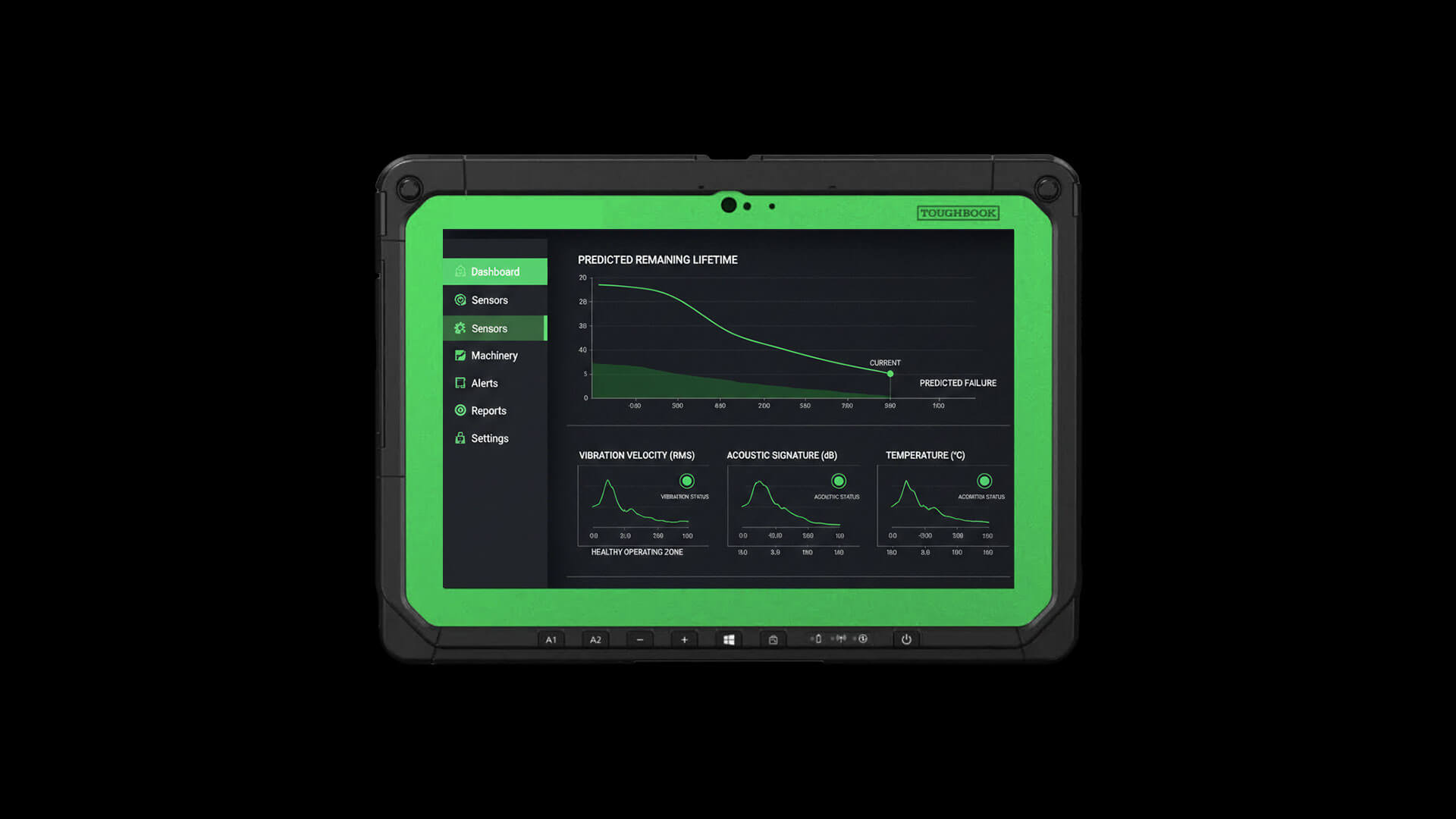
ai powered cloud platform
Intuitive, web-based software that streamlines system configuration, delivers continuous machine monitoring, and enables advanced data analysis with flexible, customisable alerting. Data transmission is encrypted, AWS-managed database, disaster recovery, and customer data ownership.
WHAT DO WE USE?
for high quality data collection we generally use:

high frequency microphone
High-frequency microphones capture the acoustic signature of operating machines. Subtle changes in sound patterns reveal friction, imbalance, wear, or emerging faults long before failure occurs.

accelerometer
Accelerometers and vibration sensors monitor a machine’s movements in real time, detecting subtle oscillations, imbalances, and abnormal patterns. These signals reveal early signs of wear, misalignment, or component fatigue.

humidity sensor
Humidity sensors monitor moisture levels in and around machinery, detecting condensation, leaks, or environmental changes that can affect performance and accelerate wear.

proximity sensor

thermometer

electrical sensor

hall sensor
Hall sensors detect the presence, position, or movement of magnetic fields in machines, monitoring rotational speed, shaft position, or alignment. Variations in magnetic signals reveal wear, misalignment, or abnormal operation.

custom sensor
We can design data acquisition sensors of your choice and tailored to your machines, capturing relevant signals, integrating seamlessly with existing systems, and enabling accurate monitoring, diagnostics, and predictive maintenance insights.
DEVICES WE MEASURE
Industries benefit from our sensors by gaining real-time insights into the health and performance of their equipment. Continuous monitoring enables early detection of wear or faults, reduces unplanned downtime, lowers maintenance costs, extends machinery lifespan, and ensures smoother, more efficient operations - transforming data into actionable reliability and productivity gains.
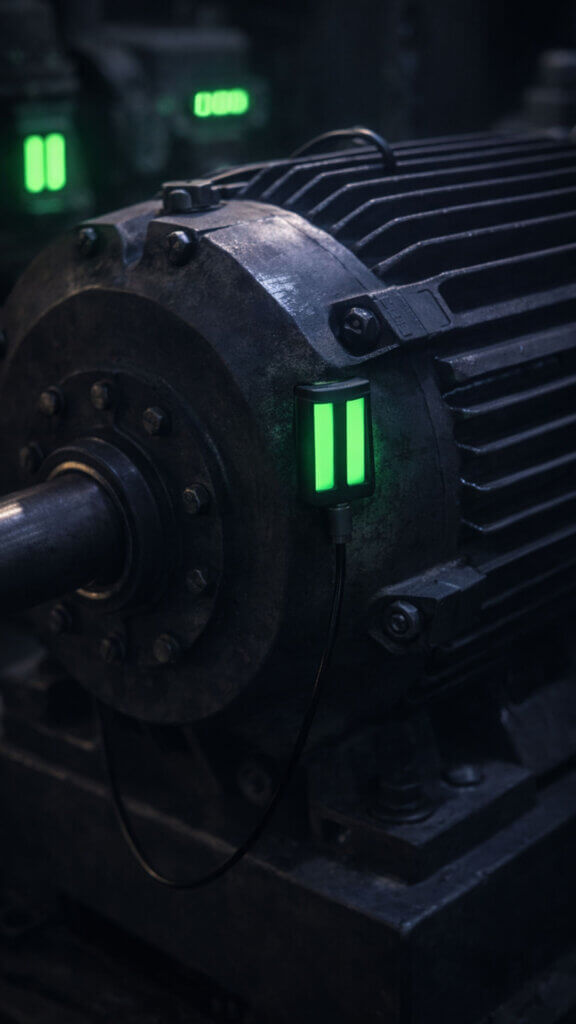
electric & combustion motors
Continuously monitoring vibrations, temperature, and operational signals. Early deviations in these patterns can indicate bearing wear, misfires, imbalance, or overheating. By detecting issues before they escalate, the system enables timely maintenance, reduces downtime, and extends motor lifespan.
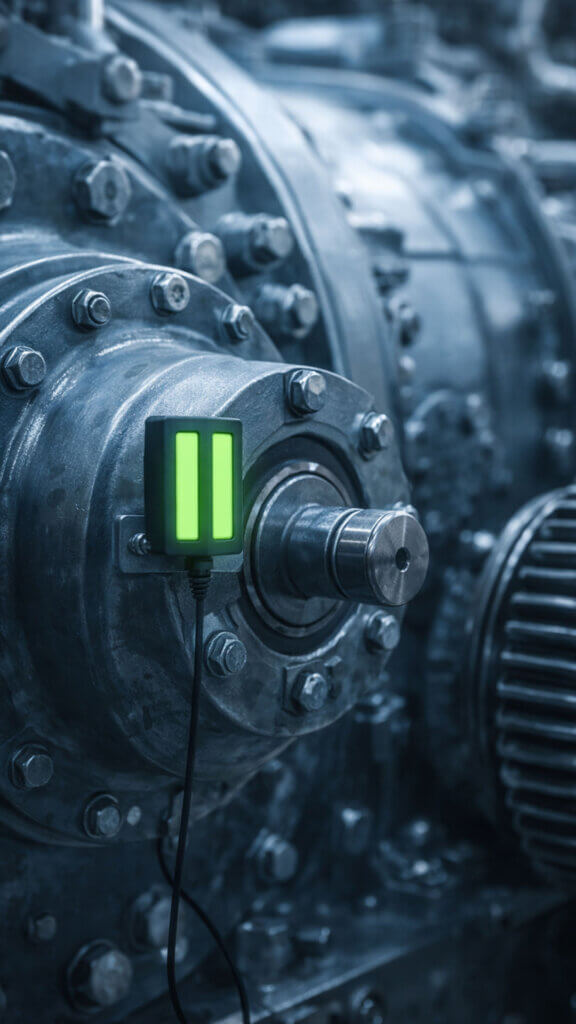
gearboxes & bearings
A sensor mounted on a gearbox continuously measures vibration, temperature, and acoustic signals. Subtle changes in these patterns reveal early signs of wear, misalignment, or lubrication issues. By detecting anomalies long before failure, the system enables timely maintenance and prevents costly unplanned downtime.

conveyors
Monitoring vibrations, speed variations, and motor current in real time. Deviations from normal patterns indicate belt wear, misalignment, or mechanical stress. Early detection of these anomalies allows proactive maintenance, reducing unexpected breakdowns, extending equipment life, and ensuring smooth, uninterrupted conveyor operation.
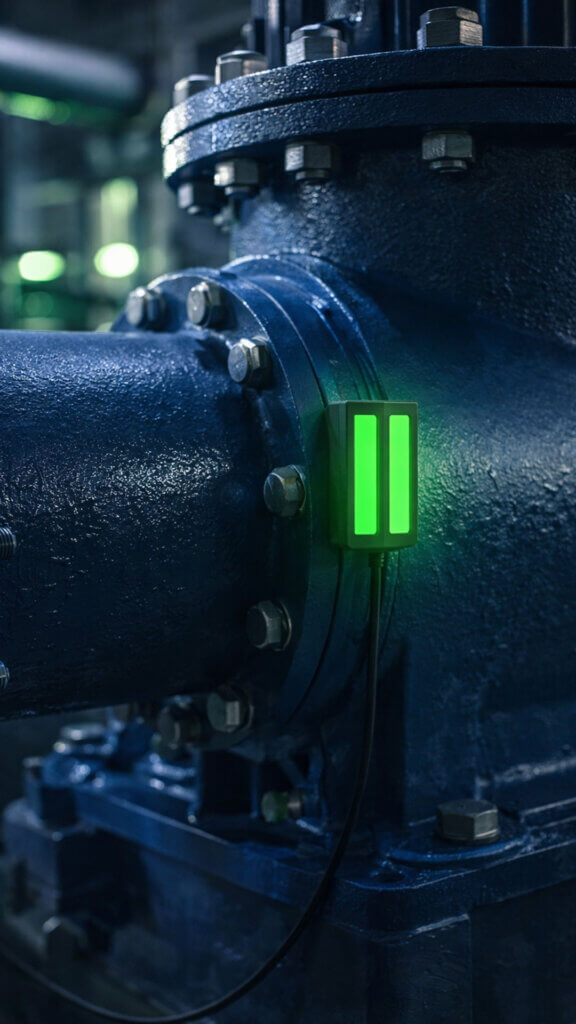
pump stations
Tracking vibration, pressure, flow, and temperature. Changes in these signals can reveal early signs of cavitation, seal leaks, impeller wear, or misalignment. Detecting these issues in real time allows proactive maintenance, preventing unexpected failures and ensuring reliable, efficient pump operation.

hvac devices
Tracking vibration, pressure, flow, and temperature. Changes in these signals can reveal early signs of cavitation, seal leaks, impeller wear, or misalignment. Detecting these issues in real time allows proactive maintenance, preventing unexpected failures and ensuring reliable, efficient pump operation.
IT WORKS!
science & evidence driven
We’ve proved our point – we know how to develop and implement predictive maintenance solutions – we harness the power of AI to turn sensor data into actionable insights, enabling smarter, proactive equipment management.

Piotr Kmita
Application of artificial intelligence for detecting damage in rolling bearings